


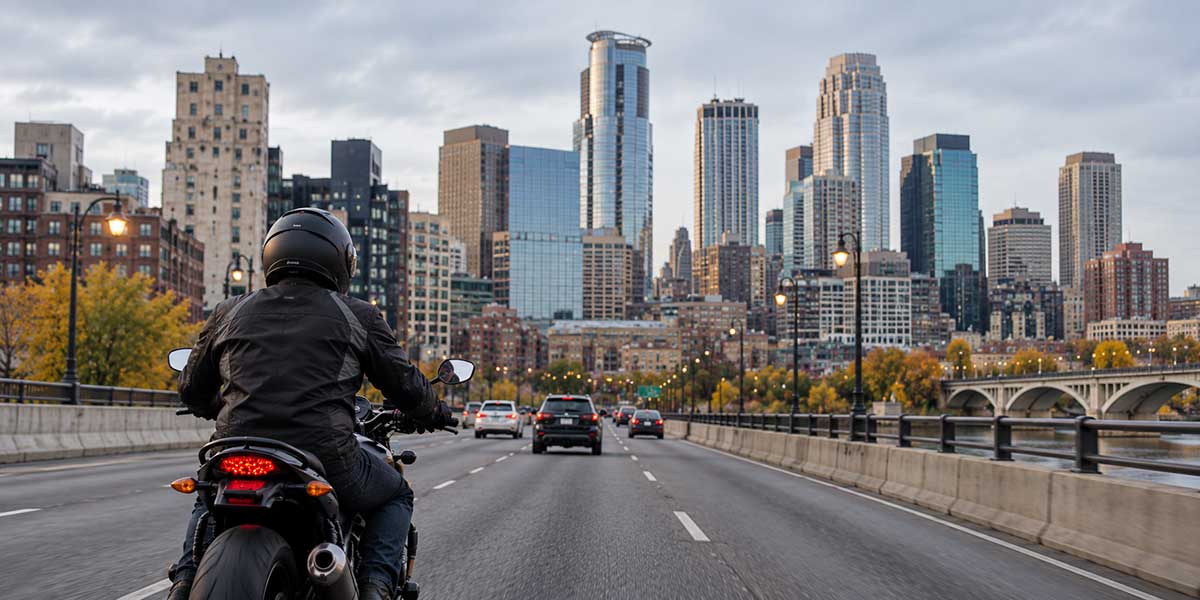
Most people assume that every motorcyclist in Minnesota has to strap on a helmet before pulling out of the driveway. That assumption is wrong more often than you’d think. The state’s helmet law applies only to certain riders, while a separate rule on eye protection applies to nearly everyone on two wheels. Knowing exactly where that line falls matters whether you’re gearing up for a ride this weekend or trying to make sense of what happened after a crash. Riders who get this wrong sometimes learn the hard way, either through an unexpected citation or a fight with an insurance adjuster who assumes a helmet was mandatory when it wasn’t. If you or someone you love has already been hurt in a wreck, talking with a motorcycle accident lawyer early can help sort out what the law actually required, before an insurer gets to frame the story first.
Minnesota’s Helmet Law Isn’t as Broad as People Think
Under Minnesota Statutes section 169.974, the helmet requirement is narrower than a universal law. Two groups are covered. Anyone riding on a motorcycle instruction permit, rather than a full motorcycle endorsement, must wear a DOT-approved helmet every time they ride. Separately, any rider or passenger under 18 must wear one too, regardless of what license or endorsement the operator holds. Once a rider turns 18 and earns a full motorcycle endorsement, Minnesota no longer requires a helmet. That surprises many people, especially transplants from states with universal helmet laws.
This distinction matters more than it seems. Minnesota follows a modified comparative negligence law, meaning your compensation after a crash can be reduced if you’re found partly responsible for what happened, but only for conduct the law actually required of you. Riding without a helmet you weren’t legally obligated to wear generally shouldn’t be treated as fault, even though insurance companies sometimes try to argue otherwise. Because that window for holding someone accountable doesn’t stay open forever, Minnesota’s statute of limitations gives you a set number of years to bring a claim after a crash, so it helps to understand your timeline early rather than after the fact.
The Eye Protection Rule Applies to Everyone
Unlike the helmet requirement, Minnesota’s eye protection rule doesn’t carve out exceptions for age or license type. Under Subdivision 4 of the same statute, no one may operate a motorcycle without wearing an eye-protective device, full stop. Acceptable options include a face shield attached to the helmet, riding goggles, or glasses built to shield the eyes from wind, debris, and insects at highway speed. A common misconception trips riders up here: a windshield mounted on the motorcycle itself does not satisfy this requirement, according to the Minnesota Department of Public Safety. You still need eyewear rated for the job, even if your bike has a windshield tall enough to block most of the wind.
The law also carves out two narrow exceptions to the helmet and eye protection rules. Riders don’t need to comply while participating in an officially permitted parade, and passengers riding inside an enclosed-cab autocycle are exempt as well, since that vehicle type already provides a level of protection closer to a car.
What Actually Counts as a DOT-Approved Helmet
Not every helmet sold in a store meets the legal standard, so it helps to know what you’re looking for. A DOT-approved helmet carries a certification sticker permanently affixed to the back, along with a label sewn into the liner identifying the manufacturer. To earn that certification, a helmet has to pass a battery of federal safety tests covering impact absorption, penetration resistance, and how well the retention system keeps the helmet on your head during a crash instead of flying off on impact.
Novelty helmets, the thin shells sold mainly to look the part rather than protect anyone, almost never meet this bar, even though they’re widely available and easy to mistake for the real thing. If you’re shopping for gear and the price feels too good to be true, check the labeling before you buy it. A few extra minutes spent reading a sticker is a small price for knowing your head is actually protected.
Why Minnesota Keeps the Helmet Debate Alive
Minnesota lawmakers have debated expanding the helmet law for years, and the arguments tend to repeat themselves. Riders who oppose a universal law point to personal freedom and argue that experienced adults should be able to weigh their own risk. Safety advocates point to the numbers instead. Minnesota Department of Public Safety crash data from 2020 recorded 64 motorcyclist deaths and 926 injuries statewide, and roughly 64 percent of the riders killed that year were confirmed not to be wearing a helmet at the time of the crash. That gap between who is legally required to wear a helmet and who actually dies without one is exactly why the debate hasn’t gone away, and why it’s worth reading the actual statute language rather than relying on hearsay from a buddy at the bar.
What Happens If You’re Hurt in a Crash Without a Helmet
A crash is stressful enough without also wondering whether your gear choices will be used against you. If you were legally required to wear a helmet and weren’t, that can factor into a comparative fault argument and reduce what you’re able to recover. If you weren’t legally required to wear one, an insurance adjuster may still bring it up during negotiations, hoping you don’t know the difference. That’s a common negotiating tactic, not a reflection of what Minnesota law actually says.
Either way, injuries from a motorcycle crash tend to be severe because riders have so little protection between themselves and the pavement. Road rash, fractures, and traumatic brain injuries are common even in crashes that a car occupant would walk away from with minor bruising. Documenting the crash scene, seeking medical care right away, and keeping records of every bill and missed shift at work all strengthen a claim later, regardless of what you were or weren’t wearing at the time.
Frequently Asked Questions About Minnesota’s Motorcycle Helmet Law
Does Minnesota require all motorcyclists to wear a helmet?
No. Only riders and passengers under 18, and anyone operating on a motorcycle instruction permit, are required to wear a DOT-approved helmet. Adults with a full motorcycle endorsement can legally ride without one.
Does Minnesota require eye protection even if my helmet doesn’t have a visor?
Yes. The eye protection requirement is separate from the helmet law and applies to every rider regardless of age or license type. A helmet without a built-in shield still needs to be paired with goggles or glasses that meet the standard.
Does a windshield on my motorcycle count as eye protection?
No. The Minnesota Department of Public Safety has confirmed that a windshield does not satisfy the eye protection requirement, even a tall one. You still need a face shield, goggles, or glasses rated for the job.
Can I still recover compensation if I wasn’t wearing a helmet during my crash?
Often, yes, especially if the law didn’t require you to wear one in the first place. Minnesota’s modified comparative negligence rule can reduce your compensation if you were partly at fault, but not wearing optional safety gear generally isn’t the same as breaking the law. An attorney can push back if an insurer argues otherwise.
How long do I have to file a claim after a motorcycle accident in Minnesota?
Most motorcycle accident injury claims in Minnesota must be filed within six years of the crash, though wrongful death claims carry a shorter three-year window. Waiting too long can cost you the right to recover anything at all.
Whether you’re trying to stay on the right side of the law before your next ride or you’re already dealing with the aftermath of a crash, understanding where Minnesota’s helmet and eye protection rules actually apply puts you in a stronger position. If you or a loved one was hurt in a motorcycle accident, our team at Milavetz Injury Law, P.A., is available to talk through your options and explain what a claim could look like in your situation. Call us at 763-560-0000 or reach out online to schedule a free consultation.